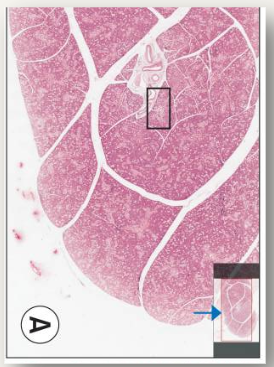
This section offers a large collection of rare and high-quality digital slides. Users can freely rotate and magnify the digital slides, mimicking the experience of viewing slides under a real light microscope.
The slides were scanned with multiple layers of z-stacking. This method takes multiple images at different focal distances to ensure that users can magnify the digital slides and still get an entirely focused, high-resolution field-of-view. The incorporation of Histoscope 2.0 can stimulate active learning and student engagement by mimicking the experience of using a light microscope.
Cross Section of Crown
This section offers a large collection of rare and high-quality digital slides. Users can freely rotate and magnify the digital slides, mimicking the experience of viewing slides under a real light microscope.
The slides were scanned with multiple layers of z-stacking. This method takes multiple images at different focal distances to ensure that users can magnify the digital slides and still get an entirely focused, high-resolution field-of-view. The incorporation of Histoscope 2.0 can stimulate active learning and student engagement by mimicking the experience of using a light microscope.
Cross Section of Crown
This section offers a large collection of rare and high-quality digital slides. Users can freely rotate and magnify the digital slides, mimicking the experience of viewing slides under a real light microscope.
The slides were scanned with multiple layers of z-stacking. This method takes multiple images at different focal distances to ensure that users can magnify the digital slides and still get an entirely focused, high-resolution field-of-view. The incorporation of Histoscope 2.0 can stimulate active learning and student engagement by mimicking the experience of using a light microscope.
Face Development
This section offers a large collection of rare and high-quality digital slides. Users can freely rotate and magnify the digital slides, mimicking the experience of viewing slides under a real light microscope.
The slides were scanned with multiple layers of z-stacking. This method takes multiple images at different focal distances to ensure that users can magnify the digital slides and still get an entirely focused, high-resolution field-of-view. The incorporation of Histoscope 2.0 can stimulate active learning and student engagement by mimicking the experience of using a light microscope.
Gingiva
This section offers a large collection of rare and high-quality digital slides. Users can freely rotate and magnify the digital slides, mimicking the experience of viewing slides under a real light microscope.
The slides were scanned with multiple layers of z-stacking. This method takes multiple images at different focal distances to ensure that users can magnify the digital slides and still get an entirely focused, high-resolution field-of-view. The incorporation of Histoscope 2.0 can stimulate active learning and student engagement by mimicking the experience of using a light microscope.
Longitudinal Section of the Tooth
This section offers a large collection of rare and high-quality digital slides. Users can freely rotate and magnify the digital slides, mimicking the experience of viewing slides under a real light microscope.
The slides were scanned with multiple layers of z-stacking. This method takes multiple images at different focal distances to ensure that users can magnify the digital slides and still get an entirely focused, high-resolution field-of-view. The incorporation of Histoscope 2.0 can stimulate active learning and student engagement by mimicking the experience of using a light microscope.
Molar Pulp Stone
This section offers a large collection of rare and high-quality digital slides. Users can freely rotate and magnify the digital slides, mimicking the experience of viewing slides under a real light microscope.
The slides were scanned with multiple layers of z-stacking. This method takes multiple images at different focal distances to ensure that users can magnify the digital slides and still get an entirely focused, high-resolution field-of-view. The incorporation of Histoscope 2.0 can stimulate active learning and student engagement by mimicking the experience of using a light microscope.
Palate
This section offers a large collection of rare and high-quality digital slides. Users can freely rotate and magnify the digital slides, mimicking the experience of viewing slides under a real light microscope.
The slides were scanned with multiple layers of z-stacking. This method takes multiple images at different focal distances to ensure that users can magnify the digital slides and still get an entirely focused, high-resolution field-of-view. The incorporation of Histoscope 2.0 can stimulate active learning and student engagement by mimicking the experience of using a light microscope.
Mimic the experience of using a microscope
This section offers a large collection of rare and high-quality digital slides. Users can freely rotate and magnify the digital slides, mimicking the experience of viewing slides under a real light microscope.
The slides were scanned with multiple layers of z-stacking. This method takes multiple images at different focal distances to ensure that users can magnify the digital slides and still get an entirely focused, high-resolution field-of-view. The incorporation of Histoscope 2.0 can stimulate active learning and student engagement by mimicking the experience of using a light microscope.
Parotid Gland
This section offers a large collection of rare and high-quality digital slides. Users can freely rotate and magnify the digital slides, mimicking the experience of viewing slides under a real light microscope.
The slides were scanned with multiple layers of z-stacking. This method takes multiple images at different focal distances to ensure that users can magnify the digital slides and still get an entirely focused, high-resolution field-of-view. The incorporation of Histoscope 2.0 can stimulate active learning and student engagement by mimicking the experience of using a light microscope.
Mimic the experience of using a microscope
This section offers a large collection of rare and high-quality digital slides. Users can freely rotate and magnify the digital slides, mimicking the experience of viewing slides under a real light microscope.
The slides were scanned with multiple layers of z-stacking. This method takes multiple images at different focal distances to ensure that users can magnify the digital slides and still get an entirely focused, high-resolution field-of-view. The incorporation of Histoscope 2.0 can stimulate active learning and student engagement by mimicking the experience of using a light microscope.
Submandibular Gland
This section offers a large collection of rare and high-quality digital slides. Users can freely rotate and magnify the digital slides, mimicking the experience of viewing slides under a real light microscope.
The slides were scanned with multiple layers of z-stacking. This method takes multiple images at different focal distances to ensure that users can magnify the digital slides and still get an entirely focused, high-resolution field-of-view. The incorporation of Histoscope 2.0 can stimulate active learning and student engagement by mimicking the experience of using a light microscope.
Temporomandibular Joint (TMJ)
This section offers a large collection of rare and high-quality digital slides. Users can freely rotate and magnify the digital slides, mimicking the experience of viewing slides under a real light microscope.
The slides were scanned with multiple layers of z-stacking. This method takes multiple images at different focal distances to ensure that users can magnify the digital slides and still get an entirely focused, high-resolution field-of-view. The incorporation of Histoscope 2.0 can stimulate active learning and student engagement by mimicking the experience of using a light microscope.
Tongue
This section offers a large collection of rare and high-quality digital slides. Users can freely rotate and magnify the digital slides, mimicking the experience of viewing slides under a real light microscope.
The slides were scanned with multiple layers of z-stacking. This method takes multiple images at different focal distances to ensure that users can magnify the digital slides and still get an entirely focused, high-resolution field-of-view. The incorporation of Histoscope 2.0 can stimulate active learning and student engagement by mimicking the experience of using a light microscope.
Tooth Development
This section offers a large collection of rare and high-quality digital slides. Users can freely rotate and magnify the digital slides, mimicking the experience of viewing slides under a real light microscope.
The slides were scanned with multiple layers of z-stacking. This method takes multiple images at different focal distances to ensure that users can magnify the digital slides and still get an entirely focused, high-resolution field-of-view. The incorporation of Histoscope 2.0 can stimulate active learning and student engagement by mimicking the experience of using a light microscope.
Tooth Eruption
This section offers a large collection of rare and high-quality digital slides. Users can freely rotate and magnify the digital slides, mimicking the experience of viewing slides under a real light microscope.
The slides were scanned with multiple layers of z-stacking. This method takes multiple images at different focal distances to ensure that users can magnify the digital slides and still get an entirely focused, high-resolution field-of-view. The incorporation of Histoscope 2.0 can stimulate active learning and student engagement by mimicking the experience of using a light microscope.